Understanding Orbital Mechanics: The Basics Every Space Enthusiast Should Know
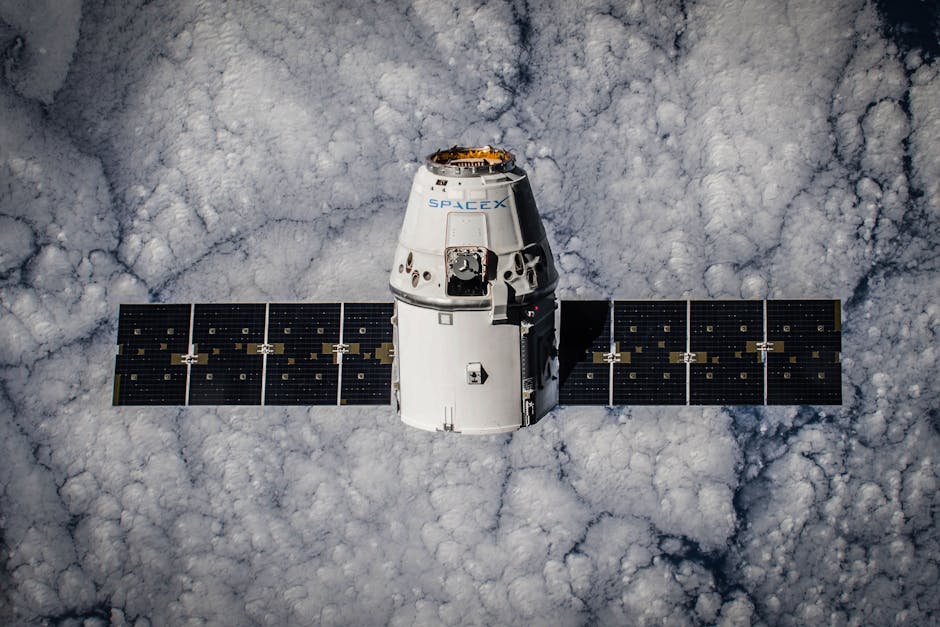
Orbital mechanics might sound intimidating, but it's the elegant science that explains how satellites, the Moon, and planets move through space. Whether you're interested in space exploration, satellite technology, or simply want to understand how the universe works, grasping the basics of orbital mechanics opens up a fascinating world.
What is an Orbit?
An orbit is the curved path that an object takes as it moves around a larger body in space. This happens because of gravity. When an object moves fast enough sideways whilst being pulled down by gravity, it falls around the planet rather than into it. This perfect balance creates a stable orbit.
The Key Forces at Play
Two main forces govern orbital mechanics. Gravity pulls objects towards a central body, whilst the object's velocity pushes it away. When these forces balance perfectly, you get a stable orbit. Too much velocity and the object escapes into space; too little and it falls back down.
Types of Orbits
Different orbits serve different purposes. Low Earth Orbit (LEO) is closest to our planet, used by many satellites and the International Space Station. Geostationary Orbit (GEO) sits much higher, allowing satellites to stay above the same spot on Earth. There are also elliptical orbits that bring spacecraft closer and farther from Earth at different points in their journey.
Why This Matters
Understanding orbital mechanics helps explain how GPS works, why satellites don't fall down, and how spacecraft navigate to distant planets. It's the foundation of modern space exploration and telecommunications. Every weather forecast, navigation system, and international phone call depends on satellites in precisely calculated orbits.
The beauty of orbital mechanics is that the same principles apply whether you're looking at a tiny satellite orbiting Earth or planets orbiting the Sun. Newton's laws of motion and universal gravitation, combined with careful mathematics, let us predict and control the movement of objects in space with remarkable precision. This knowledge has transformed humanity's relationship with space.